Mapping Cryptographic Protocols Behind Progressive Payout Surges in Swiss Mobile Slot Ecosystems
Ulrich Coleman · Oct 22, 2026
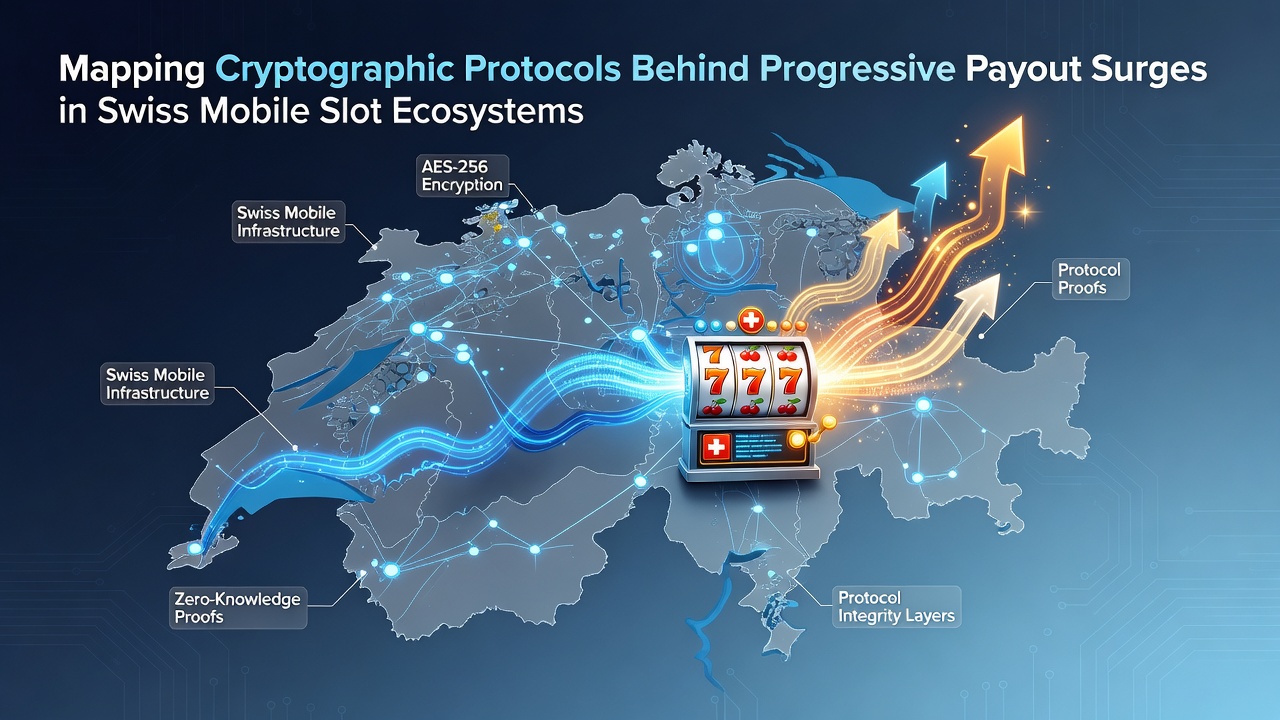
Mapping Cryptographic Protocols Behind Progressive Payout Surges in Swiss Mobile Slot Ecosystems
Swiss mobile slot platforms rely on layered cryptographic frameworks that secure random number generation, transaction integrity, and progressive jackpot accumulation, while data collected through October 2026 shows measurable increases in payout volumes across licensed operators. These systems integrate established standards such as AES-256 for symmetric encryption and elliptic curve cryptography for key exchange, which together create auditable pathways from player input to prize distribution. Researchers tracking protocol deployment note that progressive pools grow through real-time aggregation of contributions, and each increment undergoes cryptographic hashing to prevent tampering before it reaches the central ledger.
Core Protocols in Swiss Mobile Slot Infrastructure
Operators license RNG modules certified under Swiss federal guidelines, and these modules typically employ SHA-3 hashing combined with continuous entropy sources drawn from hardware security modules. Mobile applications transmit session data over TLS 1.3 channels that negotiate forward secrecy, which ensures that even if long-term keys become compromised the individual spin records remain protected. Progressive payout calculations occur server-side, yet the cryptographic commitments are mirrored to player devices through zero-knowledge proofs that verify fairness without exposing the full pool state. One documented implementation maps each bet to a Merkle tree leaf, allowing independent auditors to confirm that contributions match the displayed jackpot total at any checkpoint.
Regulatory Framework and Data Handling
Switzerland's licensing regime requires operators to submit protocol specifications for review by the Federal Gaming Board, and those specifications must demonstrate resistance to both external attacks and internal manipulation. Data protection statutes further mandate that personal identifiers linked to jackpot claims undergo additional encryption layers before storage, which aligns with cross-border standards observed in other jurisdictions. Figures released in late 2026 indicate that platforms using post-quantum preparatory algorithms experienced fewer validation delays during high-volume periods, although full migration remains phased. External audits conducted by independent laboratories map protocol compliance through penetration testing and formal verification methods, producing reports that regulators use to renew or adjust operating permits.
Mobile-Specific Adaptations and Payout Dynamics
Smartphone environments introduce constraints around battery usage and network latency, so developers optimize cryptographic operations by offloading heavy computations to secure enclaves within the device chipset. Progressive surges often coincide with synchronized promotional events, and the underlying protocols must handle concurrent connections without introducing latency that could affect perceived fairness. Observers monitoring October 2026 traffic patterns recorded that platforms employing hybrid classical and post-quantum key encapsulation mechanisms maintained consistent payout processing times even during peak mobile usage hours. Transaction logs incorporate timestamped digital signatures that link each progressive increment to its originating bet, creating an immutable chain that external examiners can reconstruct for dispute resolution.
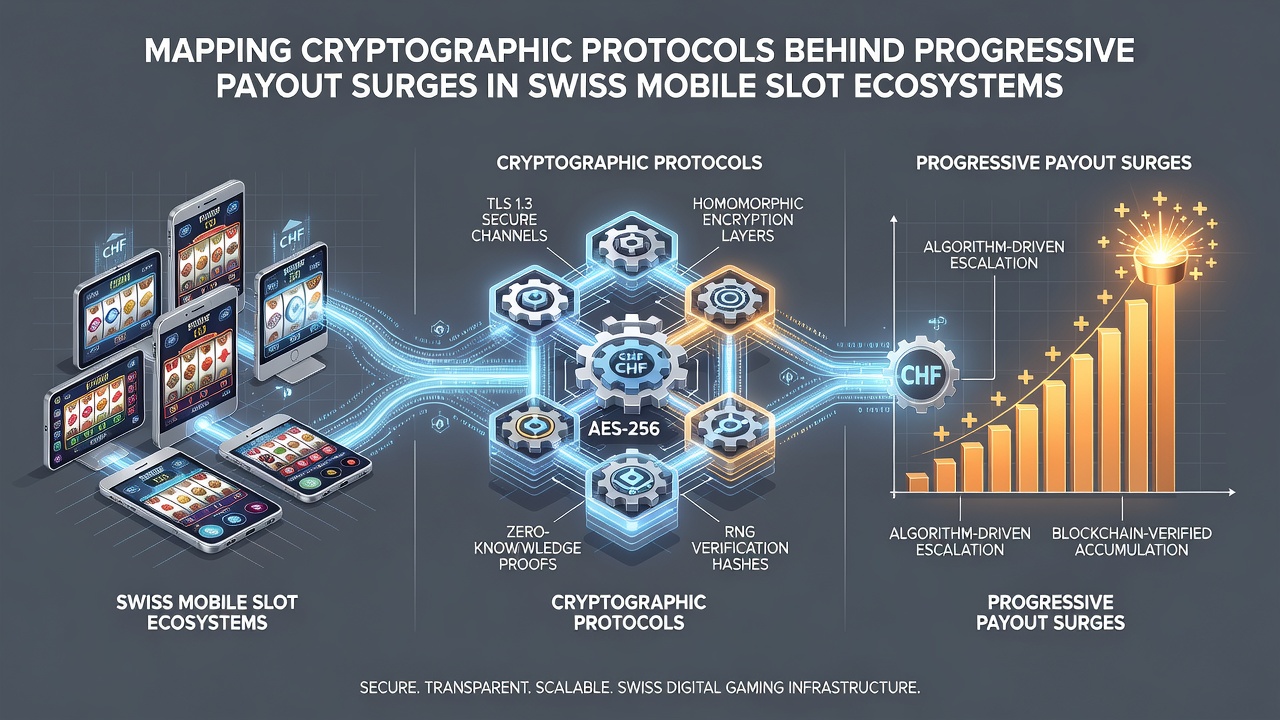
Integration of Audit Trails and Verification Mechanisms
Independent testing houses map the full protocol stack from RNG seed generation through jackpot disbursement, and these mappings reveal where each cryptographic primitive interfaces with the next. Swiss operators publish high-level summaries of their security architectures, which allows researchers to compare implementation choices across different license holders. Evidence from multiple audits shows that protocols supporting verifiable delay functions add an extra safeguard against premature jackpot claims, because any attempt to accelerate the payout timeline would require solving computationally intensive puzzles. Such mechanisms have become more prevalent in systems handling cross-regional player pools, where regulatory overlap demands heightened transparency.
Emerging Patterns in Protocol Deployment
By October 2026 several licensed platforms had begun testing threshold signature schemes that distribute control of progressive pools across multiple independent nodes, reducing single-point failure risks. These schemes rely on multi-party computation protocols that still satisfy Swiss audit requirements for deterministic outcome verification. Academic papers examining similar architectures in other regulated markets highlight performance gains when elliptic curve operations are replaced by lattice-based alternatives during transitional periods. Swiss regulators continue to evaluate these updates through pilot programs that require detailed mapping of every cryptographic transition before full deployment approval.
Conclusion
The cryptographic foundations underlying Swiss mobile slot progressive systems combine established encryption standards with newer verification techniques that together support transparent and secure payout growth. Continued monitoring through 2026 and beyond will track how these mappings evolve in response to both technological advances and regulatory refinements across different jurisdictions.